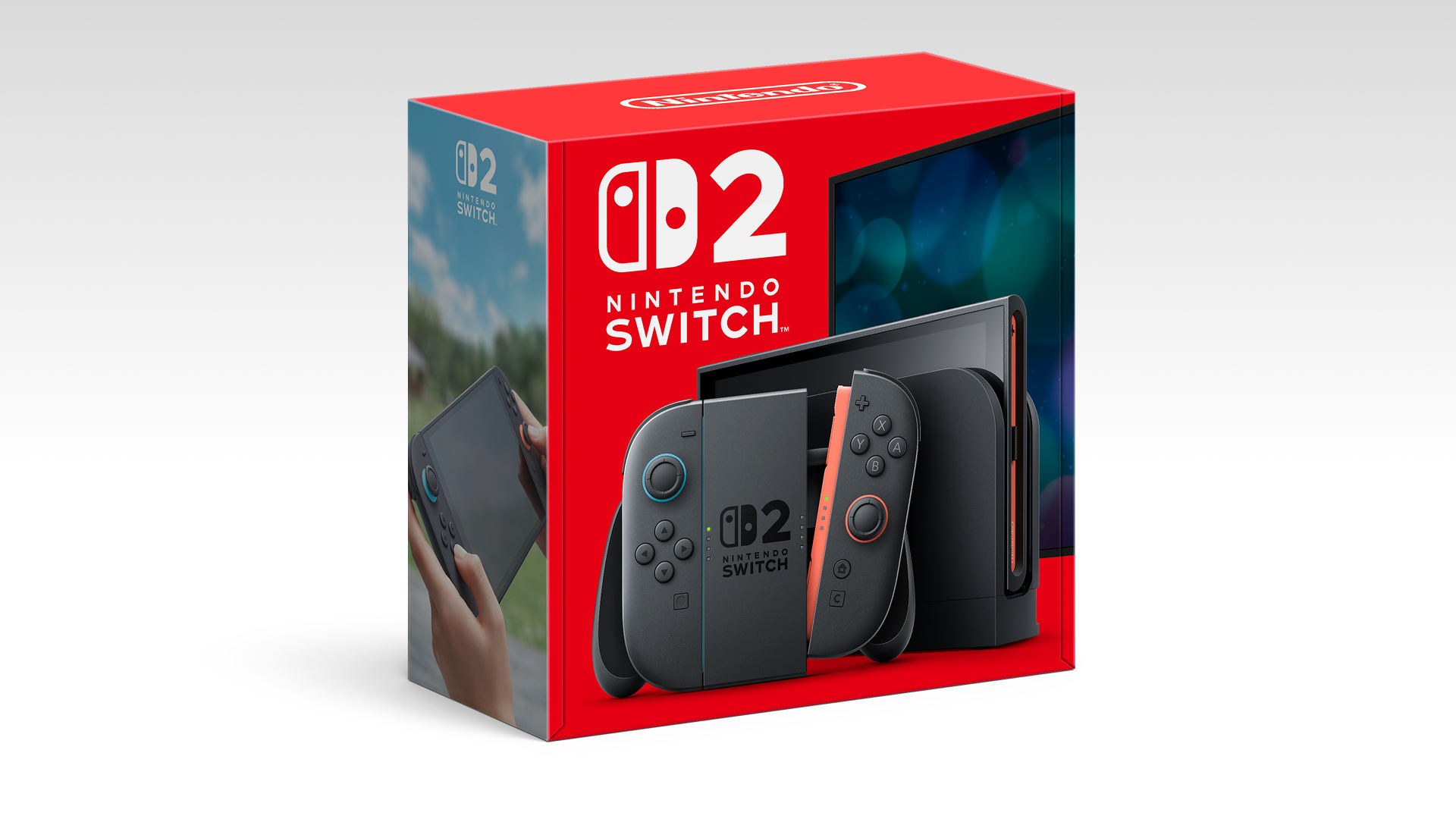
The console business reports its July to September quarter next month, and for once two of the three platform holders will do it on the same day. Nintendo’s investor relations calendar lists its six-month earnings release for November 5, and Sony’s IR schedule for the fiscal year puts its second-quarter announcement on November 5 as well. Microsoft had not confirmed its date when we checked this morning, although third-party earnings calendars expect it in the last week of October, close to last year’s October 29 report.
Before those numbers arrive, we went back to what each company has already put in writing: Nintendo’s August 6 financial results explanatory material, Sony’s July 31 Q1 presentation (filed with the SEC as a Form 6-K) alongside Sony Interactive Entertainment’s business data page, and Microsoft’s July 29 earnings release and investor metrics. Lined up side by side, they describe three hardware businesses going into the holiday quarter in very different shape. What follows is a scorecard of reported figures and the targets the companies set for themselves, not a forecast of what they will announce.
Where each platform stood on June 30
The three companies do not report hardware the same way, which is part of why their results are so often compared badly. Nintendo and Sony publish sell-in units, meaning consoles shipped to retailers and sold through their own stores, while Microsoft discloses only the year-on-year change in Xbox hardware revenue. The table keeps each company’s own measure rather than forcing them into one.
| April–June 2026 | Nintendo | Sony | Microsoft (Xbox) |
|---|---|---|---|
| Quarter hardware | Switch 2: 3.82M units (−34.4% YoY); Switch: 0.66M | PS5: 1.6M units (2.5M a year earlier) | Hardware revenue −13% YoY; units not disclosed |
| Installed base | Switch 2: 23.68M; Switch: 156.59M | PS5: more than 95M | Not disclosed |
| Software and services | Switch 2 software 9.46M (+9.2%); Switch software 33.81M (+38.6%) | PS4/PS5 software 66.1M; 125M monthly active users | Content and services revenue −10% YoY |
| Full-year plan | 16.5M Switch 2 and 2.0M Switch, unchanged on Aug 6 | G&NS forecast raised to ¥4.54tn sales, ¥660bn operating income; no PS5 unit target published | July–Sept outlook: content and services down mid single digits, hardware down |
One detail links the Nintendo and Sony quarters. Both companies’ first-quarter profits were helped by refunds of U.S. tariffs: Nintendo says it booked roughly $300 million of IEEPA tariff refunds as a reduction in cost of sales, which is a large part of why its operating profit rose 150.5 percent to ¥142.5 billion while net sales fell 9.5 percent, and Sony lists tariff refunds first among the reasons its Game & Network Services operating income climbed 37 percent to ¥202.0 billion on flat sales. Neither boost says much about how many consoles people are buying, so the hardware lines are the better guide to the holiday quarter.
Nintendo needs about 90 percent of its launch-year pace
A 34 percent drop against the Switch 2’s launch quarter was always likely, since April to June 2025 included the system’s June 5 debut. The more useful number is how much of Nintendo’s unchanged 16.5 million forecast is still left to ship. Subtracting the 3.82 million already sold in leaves 12.68 million Switch 2 units to ship between July and March. In the same three quarters of the launch year, Nintendo shipped 14.04 million, so the forecast asks for roughly 90 percent of that pace over the remainder of the year.
| Switch 2 sell-in | FY26 (launch year) | FY27 |
|---|---|---|
| April–June | 5.82M | 3.82M |
| July–September | 4.54M | Reported November 5 |
| October–December | 7.01M | Reported early February |
| January–March | 2.49M | Reported in May |
| Full year | 19.86M | 16.50M forecast, 12.68M still to ship |
That target has to be met with a more expensive console. Nintendo’s own material notes a price revision in Japan that took effect on May 25, and in the U.S. the Switch 2 went from $449.99 to $499.99 on September 1, one of the increases we laid out in our October 3 console price guide. Nintendo also says its forecast already absorbs about ¥100 billion in higher costs from component prices, particularly memory, and tariffs. On the other side of the ledger, it told investors that Japanese sell-through stayed solid after the price change, and the latest Famitsu week reported by Gematsu, covering September 21 to 27, had Switch 2 at 32,198 units against 9,730 for the entire PS5 family.

The software side of Nintendo’s quarter is the stronger story, and it is an unusual one. The biggest seller was not a Switch 2 game at all. Tomodachi Life: Living the Dream, a Switch title that also runs on Switch 2, sold 7.94 million units in the quarter, which helped original Switch software rise 38.6 percent and digital sales almost double to ¥132.7 billion. The original Switch is also expected to fade quickly, with 1.34 million units left on its 2.0 million forecast against 2.83 million shipped in the same nine months a year earlier.
PlayStation’s softest first quarter of the generation
Sony shipped 1.6 million PS5 consoles between April and June, according to SIE’s own sales table, the lowest April to June figure since the console launched. The previous five first quarters ran 2.3, 2.4, 3.3, 2.4 and 2.5 million units. The cumulative total still passed 95 million, and Sony says PlayStation monthly active users reached 125 million in June, up 2 percent on the year, though total playtime fell 4 percent.
Sony’s full-year message was more confident than that unit count suggests. In July it raised its Game & Network Services operating income forecast to ¥660 billion from ¥600 billion, citing the tariff refunds, exchange rates and cost improvements, partly offset by what it called adjustments to the FY26 first-party title roadmap. Its presentation also includes the most direct statement any of the three has made about the memory squeeze: Sony says it has secured the memory needed for its projected PS5 sales volume this fiscal year and that its plan for PS5 hardware profitability to stay similar to last year has not changed. The same presentation lists investment in the next-generation platform among the costs that rose in the quarter. Sony gives no timing or specifications, so the next-generation figures in our September rumor roundup remain unconfirmed leaks.
For November 5, the comparison to watch is July to September. Sony has shipped between 3.3 and 4.9 million PS5s in that quarter in each of the last five years, including 4.0 million in 2025. This year’s quarter includes the September 15 launch of Marvel’s Wolverine and its limited edition PS5 Slim bundle, the hardware we looked at in our EDM-051 teardown report, and it is the first July to September quarter since Sony’s April 2 U.S. price increase, announced on the PlayStation Blog on March 27.
Xbox revenue is still shrinking as consoles get pricier
Microsoft’s numbers are thinner, but the direction is clear. Xbox content and services revenue fell 10 percent in the April to June quarter and 5 percent over the full fiscal year, and Microsoft’s release notes severance expense and impairment charges in Xbox during the quarter. Hardware revenue fell 13 percent. Because Xbox console prices were higher than a year earlier, a 13 percent revenue decline points to a steeper fall in units, although Microsoft does not publish them.
| Quarter (calendar) | Microsoft fiscal quarter | Xbox content and services, YoY |
|---|---|---|
| April–June 2025 | FY25 Q4 | +13% |
| July–September 2025 | FY26 Q1 | +1% |
| October–December 2025 | FY26 Q2 | −5% |
| January–March 2026 | FY26 Q3 | −5% |
| April–June 2026 | FY26 Q4 | −10% |
| July–September 2026 | FY27 Q1 | Guided down mid single digits |
The quarter Microsoft reports later this month will be the first to include a full three months of the August 1 price change, which, according to Xbox Wire’s June 25 announcement, added $100 to 512GB consoles and $150 to 1TB models and retired the 2TB Series X, leaving the disc Series X at $799.99 in the U.S. Management has set a recovery target rather than a hardware one. VGChartz quotes Satya Nadella saying Microsoft expects to return Xbox to growth in fiscal 2027, and Xbox CEO Asha Sharma saying growth should return by the end of that fiscal year, which closes on June 30, 2027.
The dates, and what owners should take from them
| Date | Report | The number to check |
|---|---|---|
| Late October (unconfirmed) | Microsoft FY27 Q1 | Whether content and services land inside the guided mid-single-digit decline, and how far hardware falls after the August 1 prices |
| November 5 | Nintendo six-month results | Switch 2 July–September against 4.54M last year, and whether the 16.5M forecast stays |
| November 5 | Sony Q2 FY2026 | PS5 July–September against 4.0M last year, and any change to the ¥660bn G&NS forecast |
For people who already own one of these machines, none of this changes what their console can do next week, and none of the three companies announced a new console price change alongside its latest results. The figures still matter in a practical way. Nintendo’s forecast leaves it relying on a large holiday quarter, which is the context for the October 29 Zelda 40th Anniversary hardware covered in our buyer guide. Sony’s statement that it has already secured its memory is the closest thing to a supply assurance any of the three has given for this fiscal year, though it is not a promise about prices. Microsoft’s numbers describe an Xbox business whose console revenue is shrinking faster than its content revenue, at the same time as it prepares the next-generation hardware Shuhei Yoshida contrasted with Sony and Nintendo’s plans in his comments last week. We will update this scorecard when the three reports are out.