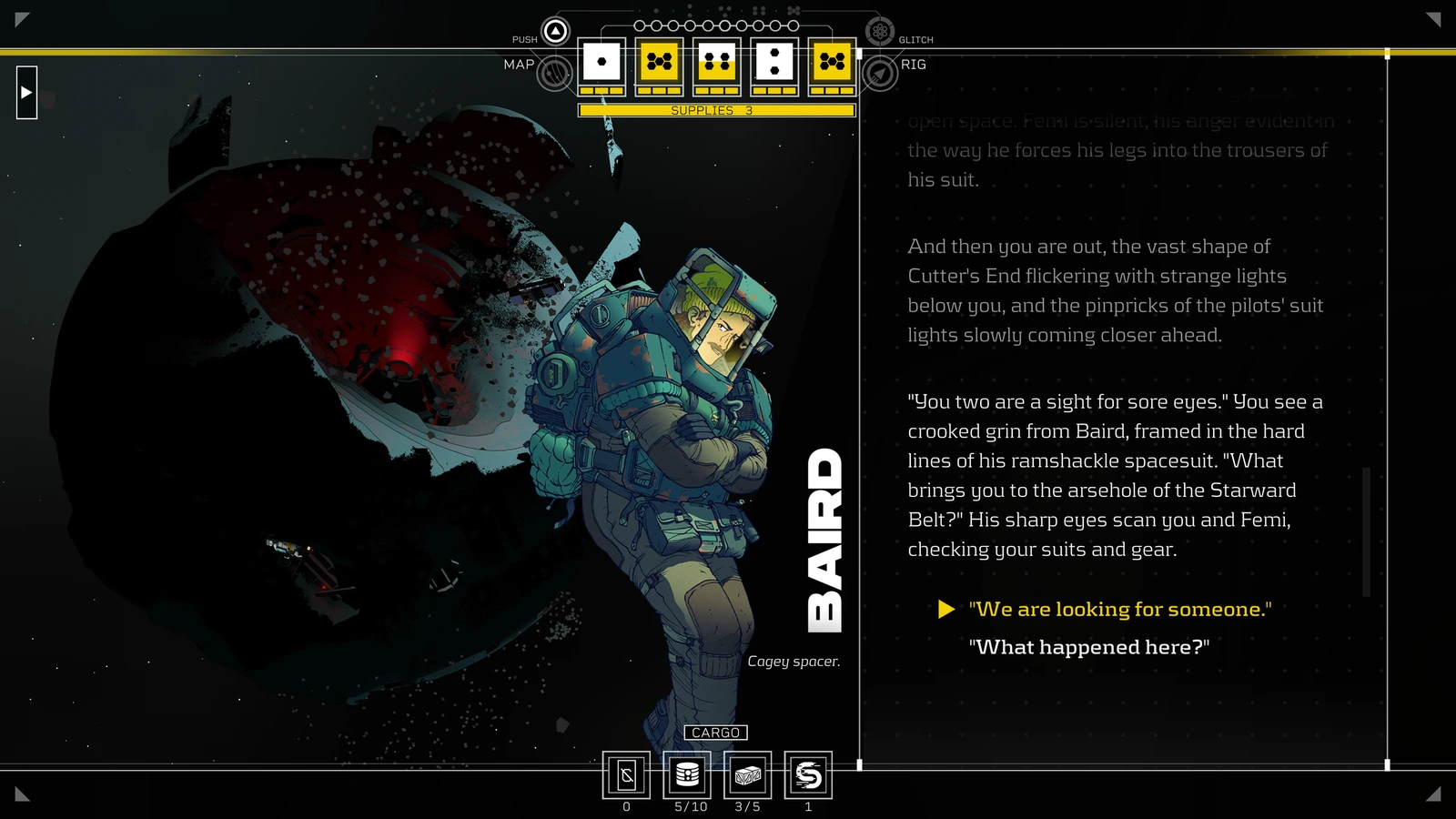
A game's first conversation shouldn't have to double as your subtitle setup screen. Before the story starts, you should be able to preview a few invented lines, adjust them from your usual seat and know whether you can comfortably follow what's being said.
The important part is the preview. A checkbox labelled “subtitles” answers whether words will appear, but it doesn't tell you whether those words will work for you. My preferred setup would show a short, spoiler-free scene with sample dialogue and let you change its presentation without leaving that scene. You could finish the setup once, then give the opening your attention.
That isn't an argument for turning every first launch into a lengthy questionnaire. It's an argument for making one useful option easy to find before the moment you need it.
Show the words in a scene
Imagine a preview with a character walking through a sunlit room, another person answering from outside and a brief sound cue. None of it needs to come from the actual story. It should exist to answer practical questions: can you read a longer sentence, distinguish speakers and keep track of a line against a changing background?
A size setting should update the sample immediately. The same should apply to a background panel, text outline, speaker labels and placement, where those options are offered. Don't make the player remember how “medium” looked while switching between a menu and a separate test screen. Put the alternatives next to the thing they're changing.
The preview should also show what happens when two lines are needed. A short greeting can look comfortable while telling you almost nothing about the space a full sentence will occupy. Likewise, a perfectly dark background is a poor demonstration of a style you're choosing for a brightly lit scene. The point isn't to construct the harshest possible test. It's to offer a representative range before you commit.
For you as a player, the useful check is simple: sit where you intend to play and read the sample without leaning forward. If someone else will share the screen, let them check it too. Choose the presentation that works for that session, rather than treating the least visible setting as the most faithful one.
Separate reading choices from story choices
Speaker labels deserve particular care. A name can help you follow a conversation, but a preview shouldn't introduce a character or reveal an identity the story is deliberately withholding. Generic labels such as “Speaker A” would demonstrate the option without borrowing a future scene. In the game itself, a label could remain descriptive until a name is meant to be known.
Dialogue and other meaningful sounds should also be explained as separate choices when the game supports them. Someone who wants to read speech may make a different choice about descriptions of footsteps or a nearby alarm. The setup should say what each option adds, using a sample, rather than expecting everyone to understand a particular menu label.
These are proposals for how a readable setup should work, not a claim that every game offers the same controls. If you're checking a game you already own, look at what its actual settings provide. Where there is no preview, make the changes you need when you can; you don't owe the default presentation an entire evening before deciding it isn't comfortable.
Keep the setup easy to revisit
A preview would remain useful after the first launch. You might move from a desk to a sofa, change the display you use or play with someone who prefers a different size. The same short sample should be available from the settings menu, without replaying the opening or starting a new save.
I'd make the first-launch invitation brief: try the sample, accept a readable default or skip directly to the game. Don't gate progress on changing every option, and don't imply that a player who skips has given up the right to adjust things later. The preview should save attention, not demand it.
For developers, the worthwhile goal is a player who can make an informed choice in a minute, not a longer list of toggles. For players, the immediate advice is to set up for the screen and seat you're actually using. Give yourself permission to make the words easier to read before judging how well the story holds your attention.