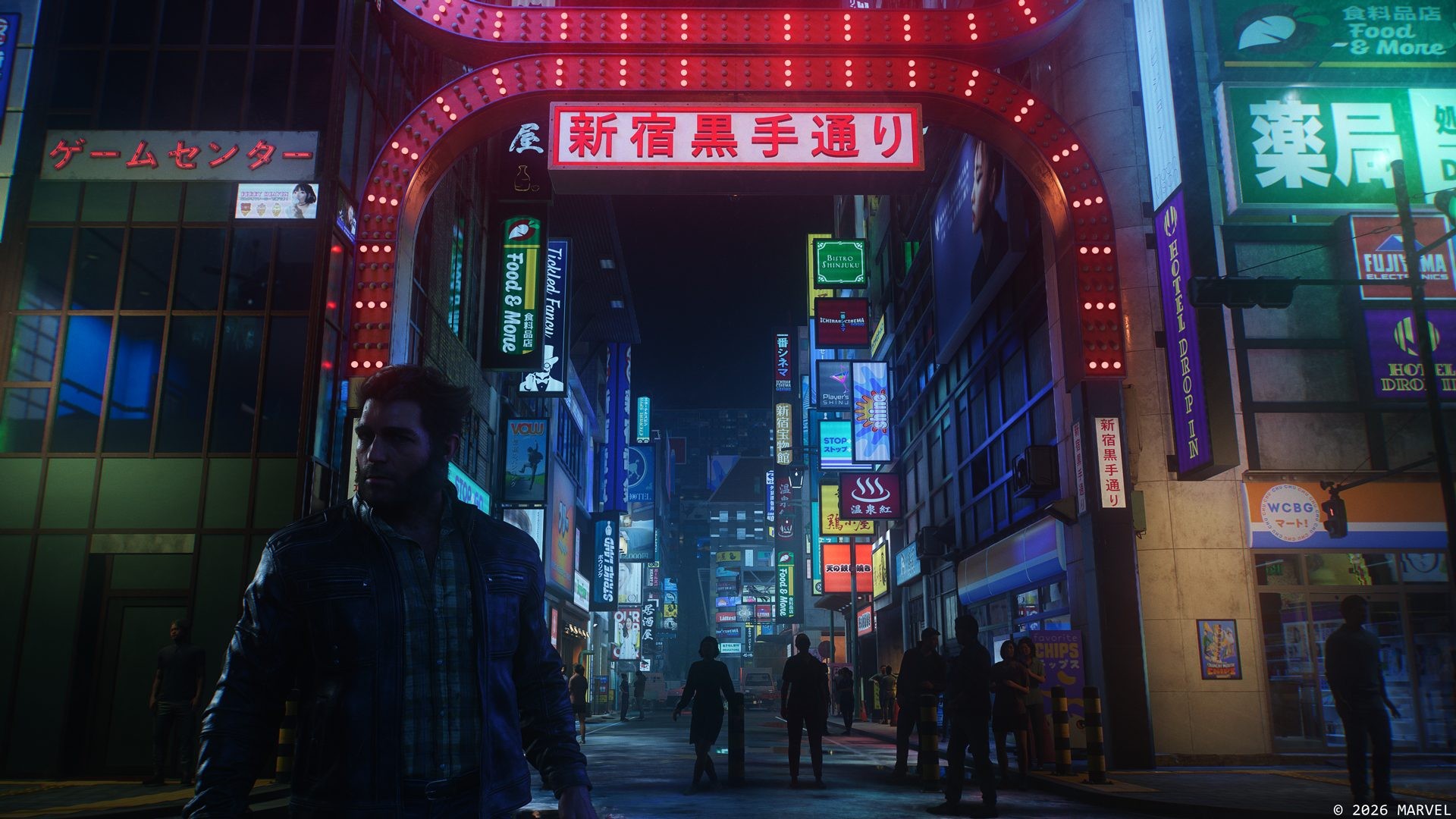
Sony just answered a question PlayStation 5 owners have been asking since the Pro launched: can base hardware get a real slice of AI upscaling, or does that stay locked to the higher SKU? On October 1, 2026, PlayStation Blog published the reply. Quick Spectral Super Resolution (QSSR) is a new performance tier of AI upscaling for standard PS5, and Marvel’s Wolverine plus Ghost of Yōtei are receiving same-day patches that add it as a graphics option.
What follows is an owner-facing explainer built from Sony’s announcement, engineer quotes carried by Digital Foundry and The Verge, and Digital Foundry’s early hands-on numbers. It is not a lab test from this site. The point is to map what QSSR is, how it differs from PSSR on PS5 Pro, which titles support it today, and what you should actually do on your console this afternoon.
What Sony announced today
Daniel Craig, principal engineer for graphics R&D at Sony Interactive Entertainment, describes QSSR as a lighter evolution of PlayStation Spectral Super Resolution. PSSR remains the Pro feature that analyzes images pixel by pixel with AI. Until now, Sony said that computational cost made bringing a similar path to base PS5 impossible. QSSR exists because Project Amethyst work with AMD produced two changes Sony is willing to ship: a streamlined neural network architecture, and a hand-tuned implementation aimed at base PS5 performance.
Sony’s own framing is careful. PSSR on PS5 Pro is still called the gold standard. QSSR is positioned as a meaningful step for detail and temporal stability on the console most people already own, not as a full Pro parity patch. Insomniac’s Mike Fitzgerald and Sucker Punch’s Jasmin Patry both appear in the blog with studio quotes about clearer environments, better sub-pixel detail, and stability that base PS5 upscalers have struggled to match.
| Feature | QSSR (standard PS5) | PSSR (PS5 Pro) |
|---|---|---|
| Who gets it | Base PS5 (Slim / original / digital), when a game adds support | PS5 Pro titles already using PSSR |
| Sony’s quality label | New performance tier; improves detail and stability vs prior PS5 upscalers | Gold standard; purpose-built ML path |
| Hardware backing (Sony / DF) | No dedicated ML silicon; relies primarily on FP16 and packed math (per Sony engineer comments to Digital Foundry) | ~300 TOPS dedicated hardware for AI upscaling (Sony via Digital Foundry) |
| Typical output target (DF / Sony) | More flexible; 1440p described as a natural target on base PS5 | Developers usually target 4K output and scale render resolution under it |
| Day-one games | Marvel’s Wolverine; Ghost of Yōtei (patches today) | Already live in Pro-enhanced titles that use PSSR |
| Developer access | Offered broadly to PlayStation developers; drop-in for many PSSR titles after retune | Existing Pro toolkit |
What Digital Foundry measured (attributed)
Digital Foundry’s hands-on is the clearest public performance picture so far, and it should be read as DF’s testing, not ours. In Marvel’s Wolverine, DF reports QSSR costing roughly 1.5–1.8 ms more than Insomniac’s prior upscaler when reconstructing about 864p to 1440p in an uncapped performance cutscene, which showed up as roughly an 8–10 fps gap in that unlocked test. In normal 60 Hz performance mode, dynamic resolution absorbs more of that cost so frame-rate stays near the target while image quality rises. Pushing toward a 2160p output in fidelity mode was much more expensive in DF’s uncapped test, around 4.4 ms, which is why Sony and DF both stress that base PS5 teams will pick output targets carefully rather than treating 4K as the default.
Ghost of Yōtei told a different story. In DF’s unlocked performance pass with VRR, QSSR ran nearly in line with the game’s existing FSR 3 path. That is only one title, and DF flags that caveat, but it is the comparison that will matter most to studios already shipping FSR-style solutions on PS5.
| Test context (Digital Foundry) | Reported cost / outcome | Owner takeaway |
|---|---|---|
| Wolverine performance, uncapped, ~864p→1440p | ~1.5–1.8 ms vs prior upscaler; ~8–10 fps in that unlocked scene | Quality gain is real; unlocked fps can dip if resolution is held fixed |
| Wolverine 60 Hz performance with DRS | Internal res lower to keep 60; output fps similar, IQ higher | This is the mode most owners will live in |
| Wolverine fidelity uncapped toward 2160p | ~4.4 ms frame-time hit in DF’s test | 4K output is a heavy ask for QSSR on base PS5 |
| Ghost of Yōtei unlocked performance vs FSR 3 | Nearly similar frame-rate in DF’s pass | When tuned like FSR 3, QSSR looks like a strong swap candidate |
Day-one titles and what owners should do
Support is not a system firmware toggle. Games have to ship or patch the library in. Today that means two first-party showcases: Marvel’s Wolverine and Ghost of Yōtei. Sony says both are being patched today so QSSR appears as an additional graphics option on PS5. Separately, Ghost of Yōtei’s Complete Edition content wave also lands on the same calendar, which is a content decision, not a QSSR requirement.
| Owner situation | What changes today | What to do |
|---|---|---|
| Base PS5, own Wolverine and/or Ghost of Yōtei | QSSR graphics option via today’s patches | Update the game, open graphics options, try QSSR in your usual Performance or Fidelity mode, then decide by eye and feel |
| PS5 Pro owner | PSSR remains the higher tier; QSSR is the base-console story | Stay on PSSR where available; no need to chase QSSR for Pro image quality |
| Base PS5, other games | Nothing yet unless a studio patches them | Watch patch notes; Sony says QSSR is broadly available and often near drop-in for PSSR titles after a few days of tuning |
| Waiting on future releases | Studios can author for QSSR + PSSR earlier | Treat QSSR support as a new checkbox in launch tech notes, not a guarantee |
Craig’s line to Digital Foundry that QSSR is “fundamentally a drop-in replacement” for titles that already support PSSR is the adoption signal. Retunes still matter — texture streaming and mip residency get called out — but the barrier looks closer to days of work than a rewrite. That is why this announcement matters beyond two day-one patches: it is a platform library change mid-generation, not a marketing slide for a future console.
Plain verdict
If you own a standard PS5 and either launch title, install today’s patches and try QSSR yourself. The official videos help set expectations, and Digital Foundry’s early read is optimistic especially for Wolverine’s stability and detail, while still drawing a clear line under Pro’s PSSR advantage. If you only care about games that have not announced support yet, there is nothing to buy and nothing to toggle until those studios ship updates. QSSR does not replace a Pro purchase for owners chasing the highest output targets, but it does shrink the gap that made base PS5 image quality feel frozen after the Pro launch.
Primary references: PlayStation Blog, “AI upscaling is coming to PS5” (Oct 1, 2026); Digital Foundry’s QSSR announcement and hands-on features; The Verge’s Oct 1 report quoting Sony engineer Daniel Craig.