Before you spend a skill point, a game should show you what that choice will change. A bigger damage number is useful, but it doesn't answer the question that matters when you're choosing an ability: will this make the character more enjoyable to play?
Our proposal is a small, optional practice space attached to the upgrade menu. You could try a candidate skill, compare it with your current version, and leave without spending anything. It would explain the decision without recommending a build or revealing the rest of the game.
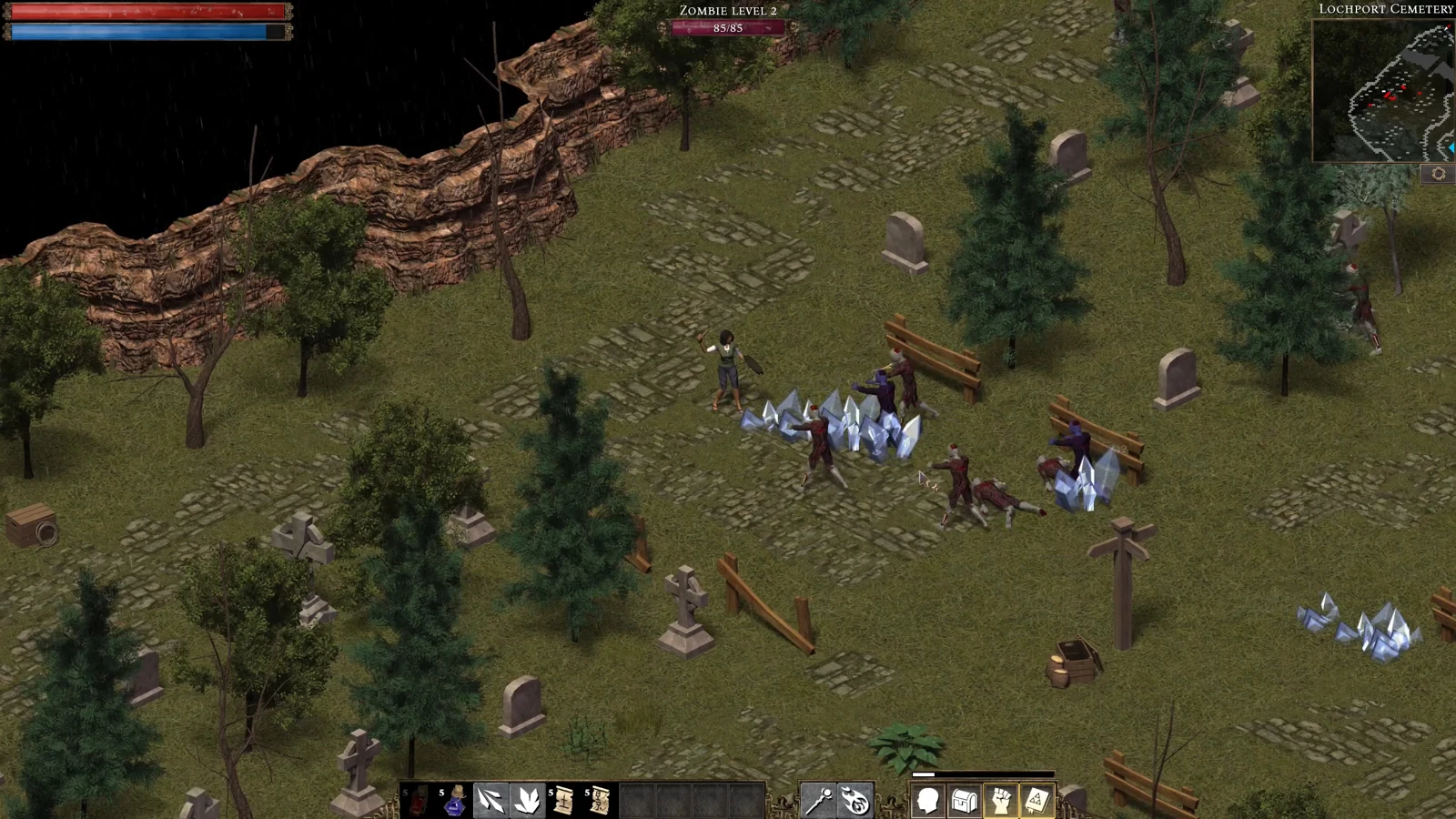
Imagine choosing between a longer dodge and an attack that pulls enemies closer. Both sound useful on a description card. In a neutral test room, you could find out whether the extra movement helps you keep your distance, or whether pulling targets together suits the way you like to fight. The point would be to understand the action, not discover which choice a guide calls best.
Let the player control the comparison
A good preview would put your current setup and the proposed skill or upgrade one button press apart. Keep the target, camera and starting position unchanged. Let you repeat the action as often as you want, then switch back. An elaborate cinematic demonstration would be less helpful than a plain room where you control the character. Building a bespoke trial for every skill would add work, so a shared room and a few reusable targets would be a sensible starting point.
That room should also expose the conditions of the demonstration. Is the upgrade being shown with your equipped gear? Are cooldowns running normally? Has the game supplied unlimited stamina? A preview with generous practice rules could still be useful, as long as you can see what has been changed and restore normal rules for a comparison.
For a passive upgrade, the demonstration could be even smaller. Show the same attack before and after, with the affected value clearly marked. If the benefit depends on a condition, let the player turn that condition on and off. A shield-breaking bonus shouldn't look like an unconditional improvement simply because the demonstration only supplies shielded targets.
None of this needs a scoreboard announcing the correct choice. The desirable outcome is being able to say, “That is what I expected,” or, “I would rather keep the shorter movement.” A slower move that feels comfortable could be the right purchase for you even if another option has a more impressive maximum.
Keep discovery outside the practice room
There is a reasonable objection: trying everything in advance could weaken the pleasure of unlocking something surprising. A preview should therefore stop at skills the player is currently allowed to purchase. It shouldn't reveal future enemies, hidden combinations, story rewards or later branches of the tree.
It should also be optional. If you enjoy choosing from a description and discovering the result in a real fight, you should be able to do exactly that. The preview button would be an invitation, not another mandatory tutorial between you and the upgrade.
Some abilities wouldn't fit a practice arena. A conversation skill, for example, might need an invented exchange that explains the choice without borrowing dialogue from an upcoming quest. A crafting bonus could use sample ingredients that never enter your inventory. Where a demonstration would be misleading, a clear explanation of the limitation would be better than a staged success that promises too much.
This is not a proposal to make every decision reversible. A game could still ask you to commit to a build and live with its trade-offs. Understanding a choice before making it doesn't require removing the choice's consequences. Equally, a free reset would not make a preview pointless: testing one change should not require rebuilding an entire character first.
A checklist for the next upgrade you buy
Until a game gives you that kind of preview, treat the description as the start of your decision. Ask what actually changes: the input, movement, target, resource cost, or only a number. Then identify the condition attached to the benefit. “After a perfect dodge” is a different promise from “whenever you dodge.”
Check whether the menu explains refunds or resets before spending a scarce resource. If it doesn't, don't assume you'll be able to undo the purchase. When two options remain unclear, choose according to the problem you want to solve rather than collecting the most dramatic wording.
An upgrade menu should help you make an informed commitment. Give players a modest place to try the available choice, preserve the surprises beyond it, and let the actual adventure decide whether their plan works.